"The successful learn vicariously; the foolish insist on firsthand pain."
- Shane Parrish
"The successful learn vicariously; the foolish insist on firsthand pain."
- Shane Parrish

“Since the mid-1980s, my mantra for this process is 'strong opinions, weakly held.' Allow your intuition to guide you to a conclusion, no matter how imperfect — this is the 'strong opinion' part. Then – and this is the 'weakly held' part – prove yourself wrong. Engage in creative doubt. Look for information that doesn’t fit, or indicators that pointing in an entirely different direction. Eventually your intuition will kick in and a new hypothesis will emerge out of the rubble, ready to be ruthlessly torn apart once again.”

“There is nothing more difficult to take in hand, more perilous to conduct, or more uncertain in its success, than to take the lead in the introduction of a new order of things; because the innovator has for enemies all those who have done well under the old conditions, and lukewarm defenders in those who may do well under the new.”- Niccolò di Bernardo dei Machiavelli, The Prince
Commenting on this 500-year-old bit of wisdom, J. Storrs Hall, author of Where Is My Flying Car?, writes:
“It still holds true today as much as it did in Renaissance Italy. Any time there is a stratification in a given field, it could be money, it could be political power, it could even be merely accrued experience and influence therefrom – there will be both incentive and opportunity for those at the top to oppose and thwart attempts to change the way things are done.”

“For Vaughn, every language is really a story about the people it connected him to.
“He learned American Sign Language from Gallaudet University students at a club called Tracks, which had a dance floor known for its vibrations.
“He picked up some Japanese. from the staff at a restaurant where he volunteered to clean the fish tank once a week.
“When his niece liked the way the word chicken sounded in Salish., they started studying it together, befriended leaders of the language school on the Flathead Indian Reservation and road-tripped to Arlee, Mont., twice.”
Source: "The remarkable brain of a carpet cleaner who speaks 24 languages," The Washington Post, 4/5/2022

“You should, in science, believe logic and arguments, carefully drawn, and not authorities.”
- Richard Feynman
(HT: Shane Parrish of Farnam Street)

“Science is a way of thinking much more than it is a body of knowledge.”
- Carl Sagan
Another rebuke of the idea that there is such a thing as 'settled science.' More rebukes here.
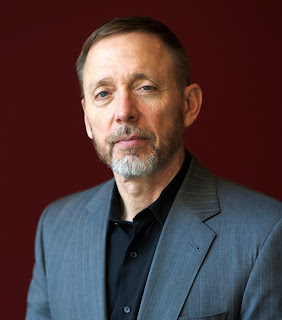
“It’s not a sin to not get the deal ... It’s a sin to take a long time to not get the deal.”
- Chris Voss, "The 7 Deadly Sins of Negotiation"
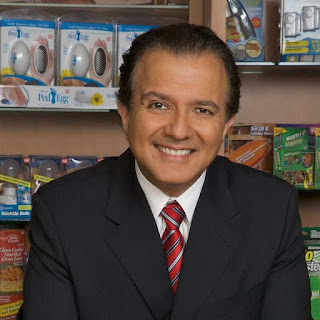
“People say youth is wasted on the young. I disagree. I believe wisdom is wasted on the old. All you can do is give it away, and the people you love the most don’t want it.”
- AJ Khubani, Founder & CEO of Telebrands
AJ texted Bill and me this quote today. He had told us a version when we visited him yesterday in Miami. It gave us pause for thought, and we were still discussing its implications this afternoon.
AJ had spoken to us about his history of being taken in by charlatans. He expressed frustration that one of his children was repeating his mistakes, yet wouldn't listen to good advice. He had all the wisdom of decades of experience to give away, but one of the people he cared most about in this world wouldn't receive his gift.
So we sat there and accepted the gift instead.

“If fifty million people say a foolish thing ... it is still a foolish thing.”
- Anatole France
What a perfect quote to articulate the ad numeram fallacy!
Per My Logical Fallacy:
“The argumentum ad numeram wrongly equates the numbers in support of a contention with the correctness of it. Ideas which have mass support are not necessarily more likely to be right; but the ad numeram supposes that they are ...
“If ideas were decided by numbers, no new ones would ever be admitted. Every new idea starts out as a minority viewpoint and gains acceptance only if the evidence for it wins converts over from the prevailing view. If numbers are the test, then Giordano Bruno was wrong when he said the earth moved around the sun, and the authorities were right to burn him at the stake.”

“The existence of a limit to science is, however, made clear by its inability to answer childlike elementary questions having to do with first and last things – questions such as 'How did everything begin?' 'What are we all here for?' 'What is the point of living?'”
- Nobel Laureate Sir Peter Medawar

“The amount of energy needed to refute bullshit is an order of magnitude larger than to produce it.”
- Alberto Brandolini, Italian programmer
Twitter commentator "Gurwinder" (@G_S_Bhogal) reformulates the law this way: “It takes a lot more energy to refute bullshit than to produce it. Hence, the world is full of unrefuted bullshit.”
We should all keep that in mind the next time we read something online. As I often say (sarcastically): “I read it on the Internet. It must be true!”
“We should never forget that good science is skeptical science. One way in which science proceeds is by attempting to falsify hypotheses; and further, we can embrace any given hypothesis; and then only tentatively, only for as long as we are unable to falsify it.”- Dr. Samuel Shapiro, founder of BU's Slone Epidemiology Center
Dr. Shapiro is yet another addition to a long and impressive list of great thinkers who have made similar points about science: Albert Einstein (here and here), Richard Feynman, Karl Popper, Nassim Taleb and Michael Crichton.
From these quoteworthy giants one idea becomes clear: The idea of a "scientific consensus" or "settled science" is antithetical to science.
(HT: Chris Kresser)
“The whole point of the US health insurance system is to make sure nobody ever figures out who bears any particular cost, so that there's no constituency for keeping prices low.”
Alexander is insightful as always and neatly summarize the arguments of Dr. Keith Smith of the Surgery Center of Oklahoma

“The curious task of economics is to demonstrate to men how little they really know about what they imagine they can design.”- Friedrich Hayek
Imagining one can design a better economic system than the free market is what Hayek more broadly referred to as “the fatal conceit,” the title of his 1988 book.
I thought of this today while ruminating on wealth taxes and the reasoning of those who suport them. Proponents of such a tax seek to take money away, but they don't think clearly about to whom that money will be entrusted: the fatally conceited.

“In his popular book, The Seven Habits of Highly Effective People, Dr. Stephen Covey says the number-one habit of highly effective people is that they are proactive. They ‘happen’ to things. Things don’t ‘happen’ to them.”- Dave Ramsey
I like this quote because it reminds me of my military days. Statements like "things don't happen to me, I happen to things" typify classic military bravado. (In my lexicon, "bravado" isn't a bad word. It's an empowering way to approach the world.)
These days, when it's trendy to find a way to be a victim and to assume people do not have agency, we could use more of this kind of thinking.

“You’re entitled to your own opinion if you keep your opinion to yourself. If you decide to say it out loud, then I think you have a responsibility to be open to changing your mind in the face of better logic or stronger data. I think if you’re willing to voice an opinion, you should also be willing to change that opinion.”
- Adam Grant
Source: The Knowledge Project

“As [Karl] Popper said, ‘In our infinite ignorance we are all equal.’ Even if someone claims expertise — and they might have a valid claim — there’s an infinite number of things they don’t know that could affect the things they do know. The student who’s not expert in anything can still come up with an idea that can challenge the foundations of the greatest expert. Like the child, the expert is ignorant about a whole bunch of things and could have errors. Someone who lacks that fine-tuned knowledge can still point out those errors and present a better idea.”- Brett Hall on the Naval Podcast
The student example is real. I remember watching a biography series on Einstein. He came up with his theory of relativity while a student at university, and it was derided and ridiculed by all the most prominent professors and scientists of the day. It went on to disrupt the foundations of those great experts and became foundational to science.

“I regard consensus science as an extremely pernicious development that ought to be stopped cold in its tracks. Historically, the claim of consensus has been the first refuge of scoundrels; it is a way to avoid debate by claiming that the matter is already settled. Whenever you hear the consensus of scientists agrees on something or other, reach for your wallet, because you're being had.
“Let’s be clear: the work of science has nothing whatever to do with consensus. Consensus is the business of politics. Science, on the contrary, requires only one investigator who happens to be right, which means that he or she has results that are verifiable by reference to the real world. In science consensus is irrelevant. What is relevant is reproducible results. The greatest scientists in history are great precisely because they broke with the consensus. There is no such thing as consensus science. If it’s consensus, it isn’t science. If it’s science, it isn’t consensus. Period.”
- Michael Crichton
(Source: "Aliens Cause Global Warming")
“If it disagrees with experiment, it's wrong. In that simple statement is the key to science. It doesn't make a difference how beautiful your guess is. It doesn't matter how smart you are, who made the guess or what his name is. If it disagrees with experiment, it's wrong. That's all there is to it.”
- Richard Feynman
(Source: "The Essence Of Science In 60 Seconds")
